Dilution of Solutions Techniques and Calculations
(dilution equation: c1V1=c2V2)
Key Concepts
- Dilution means to reduce the concentration of a solution.
- A solution is produced when a solute dissolves in a solvent.
term description example solute: substance which dissolves solid sodium chloride, NaCl(s) solvent: substance which enables the solute to dissolve liquid water, H2O(l) solution: prepared by dissolving a solute in a solvent NaCl(aq) is NaCl(s) dissolved in H2O(l) - Concentration refers to the amount of solute dissolved in a given volume of solution.
amount of solute volume of solution concentration units of
measurementmoles
mollitres
Lmoles per litre (molarity)
mol L-1 (mol/L or M)concentration of a stock solution in mol L-1 = moles of solute ÷ volume of solution in litres
c1 = n1 ÷ V1
c1 = molarity of stock solution (concentration of stock solution in mol L-1)
n1 = moles of solute dissolved (in mol)
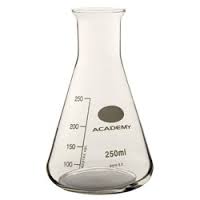
V1 = volume of stock solution (in L) - A solution can be diluted by adding more solvent to the stock solution (the starting solution before dilution) in the same vessel.
The dilution equation (dilution formula or dilution expression) is:c1V1 = c2V2
c1 = concentration of stock solution (before dilution) in mol L-1
V1 = volume of stock solution present before dilution in L
c2 = concentration of new dilute solution (after more solvent added) in mol L-1
V2 = total volume of the new dilute solution in L
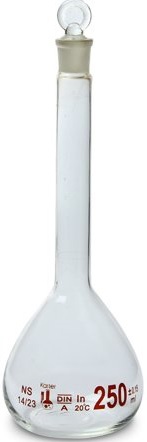
Note: V2 > V1 and c2 < c1find calculation determine concentration of dilute solution c2 = c1V1 ÷ V2 determine volume of dilute solution V2 = c1V1 ÷ c2 determine concentration of stock solution before dilution c1 = c2V2 ÷ V1 determine volume of stock solution used (before dilution) V1 = c2V2 ÷ c1 - A solution can be diluted by using a pipette to transfer some of the stock solution to a volumetric flask and then adding solvent up to the mark:
The dilution equation (dilution formula or dilution expression) is:c1V1 = c2V2
c1 = concentration of stock solution (before dilution) in mol L-1
V1 = volume of pipette used to transfer the stock solution in L
c2 = concentration of new dilute solution (after water added) in mol L-1
V2 = volume of volumetric flask used to prepare the dilute solution in Lfind calculation determine concentration of dilute solution c2 = c1V1 ÷ V2 determine volume of dilute solution V2 = c1V1 ÷ c2 determine concentration of stock solution c1 = c2V2 ÷ V1 determine volume of pipette used V1 = c2V2 ÷ c1